In the last few months we have logged every Agapanthus walshii plant or population we have found, recording GPS co-ordinates and giving them a name. Occasionally in my Fire duties in this sector, which is bigger than the area we walk normally, I have found and recorded more.
The most astonishing population is in an area which was completely forested and near a road we have walked on hundreds of times. If the plants had come up, flowers or not, we would have seen them. With the forest cut down and a fire almost two years ago, the population is the strongest we know of, and incidentally, has come into flower earliest!
This is only a part of this population. The exciting thing is that through doing nothing to those plants we know about, besides plotting them, we know they will survive the next 'crop' of pines now planted in this area, over the coming 20 or more years!
Immediately noticeable is how few flowers are in each bud.
In this immediate area we found for the first time a group of tiny Proteas.
Some have a single flower at the tip.
On others, it looks as if we will be treated to a bunch!
The Purple Powder-puff Pseudoselago serrata which we've been watching develop for months now, are in full flower, and will probably go on flowering for some weeks to come. The purple splashes in the veld are difficult to miss!
The 'puff' up close, as usual, with a bug:
We were walking along the dividing road between 'compartments' of new forest we call 'Therianthus', wondering whether the dry conditions will hold them back, and sure enough, we found some!
This particularly bright, and late-flowering Daisy caused me to get up close!
And on the way I found some Mesembryanthemums also still in flower.
Flower and spent flower detail:
The flowers on the Sour Figs Carpobrotus edulis are over, leaving interesting-looking fruit/seed pods:
Some of the pink-centred Helichrysums have turned black already!
A healthy stand of Rush Iris Bobartia filiformis:
The Star Grass Ficinia have lost their bright yellow colour, but they are still impressive!
In places, there a good crop of berries on the Teedia (or Oftia?) plants!
We are not sure what this is, a Metalasia, perhaps?
Flowers up close:
We seem to have lost the few specimens of the tall Erica obliqua where we plotted them before the fire. Several hundred metres away, we have found several plants, now about to flower, which we hope might be more.
Bud detail:
:-) Andy
Showing posts with label Daisy. Show all posts
Sunday, 18 December 2016
Monday, 3 October 2016
Sea of Yellow Sunday Flower Walk
First, the Sundowners are almost Full Blossom! First to blossom, last to pick!
Yes, still a sea of yellow, mostly Daisies.
Up close!
But that wasn't the only yellow flower! A Pea with needle-like leaves which we haven't been able to track down:
And the buds:
Last week I mentioned the Lobelias were out, these deep blue ones seem always to be in flower:
Then there's a lighter one:
... and the Lobelia jasionoides:
The Pelargoniums are still in full flower:
More pink from these little pea-types:
Teedias, but they're nearly over:
.... and a lovely Mesemb, just one flower at a time at the moment:
The whole plant, with red edges to the leaves:
Some white, from Helichrysums:
Pseudoselago spuria:
.... and Zantedeschia aethiopica!
A noisy coot on the dam next door, didn't like the dogs wallowing:
The most important part of the Walk was to log the positions, conditions and size of the various Agapanthus walshii plants we know about. In the week, forester Tommy Eckley passed on a mail from Karen Kirkman, MTO's Environmental Specialist. I tried to log the positions with my phone, but it wouldn't work, although I could see where we were on the map. We have anyway started describing where the plants are, in the old fashioned way, on paper! Once all (many of the) the plants are plotted, a plan of action will be formed, either to leave areas unplanted or more sparsely planted, with maybe some from the stronger populations moved, but gradually, into those areas.
On the way home, a Drosera:
.... and a Beetle Lily Baeometra:
:-) Andy
Yes, still a sea of yellow, mostly Daisies.
Up close!
But that wasn't the only yellow flower! A Pea with needle-like leaves which we haven't been able to track down:
The flower up close:
And the buds:
Last week I mentioned the Lobelias were out, these deep blue ones seem always to be in flower:
Then there's a lighter one:
... and the Lobelia jasionoides:
The Pelargoniums are still in full flower:
More pink from these little pea-types:
Teedias, but they're nearly over:
.... and a lovely Mesemb, just one flower at a time at the moment:
The whole plant, with red edges to the leaves:
Some white, from Helichrysums:
Pseudoselago spuria:
.... and Zantedeschia aethiopica!
A noisy coot on the dam next door, didn't like the dogs wallowing:
The most important part of the Walk was to log the positions, conditions and size of the various Agapanthus walshii plants we know about. In the week, forester Tommy Eckley passed on a mail from Karen Kirkman, MTO's Environmental Specialist. I tried to log the positions with my phone, but it wouldn't work, although I could see where we were on the map. We have anyway started describing where the plants are, in the old fashioned way, on paper! Once all (many of the) the plants are plotted, a plan of action will be formed, either to leave areas unplanted or more sparsely planted, with maybe some from the stronger populations moved, but gradually, into those areas.
On the way home, a Drosera:
.... and a Beetle Lily Baeometra:
:-) Andy
Sunday, 20 December 2015
Watsonia schlechteri Sunday Flower Walk
Well, it was difficult to decide which flower was most impressive today, but after keeping us waiting quite a long time in the burnt area, the Watsonia schlechteri are out, with many more on their heels by the look of it!
Here is the flower up close.
Another we found will make a nice advertisement by next week for Oak Valley Flowers, whose hot-houses are in the background!
While many of the Corymbium glabrum var. glabrum are over, we're still finding them here and there, this was the most impressive, with buds still to open:
The five petals can be seen on the flowers here, and the ubiquitous bottle-blue bugs!
Here is a huge five-toothed Baboon Cabbage Othonna quinquedentata, it's about 6 feet tall and as wide.
For all that, the flowers are tiny! It can be seen below that it's a Daisy.
It was distressing to see that irresponsible four-wheel-drive vehicles have once again gone straight up the hill where late Brian du Toit and I made drainage run-offs to prevent washaways. There is now no control over access to the forest, the gates are left open. I suppose for some people, this is 'just another sand dune to be conquered'? It certainly does nothing to make me support either Westvaal or Isuzu!
Not far from the one we found last week, here is another small plant completely covered with these lilac five-petalled flowers. The stigmas are long, forked and 'recurving'. We just can't find a name for it! Could they be the endangered Merciera azurea?
Another view:
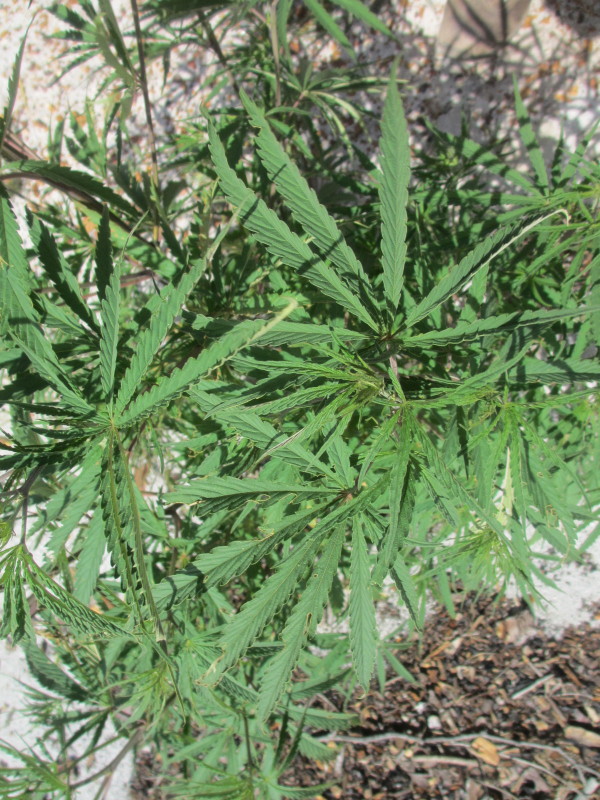
Despite showing this plant on last week's blog, none of you seem to have rushed up there to find something to smoke! Cannabis sativa?
Purple Powder-puff Pseudoselago serrata are to be found all over, this was the most impressive!
This was the only Chincherinchee Ornithogalum thyrsoides I saw, it still has many flowers to open.
We wanted to go back and check the Curlygrass fern, also called 'Comb fern'. It's easy to see why! Schizaea pectinata.
We don't often stop for a yellow daisy, there are so many. But this was particularly dark and the flowers were closing.
From the side:
And the whole plant. Any guesses?
The plants which are really coming into their own now are the rare Agapanthus walshii!
They don't often have as many florets as this, the buds are full!
We've never seen so many! This particular group is close to the 'red road' recently deforested. We would definitely have seen them before, but for the trees having been cut and the fire which followed.
The leaves don't amount to much but the stems are tall. These are more 'normal' flowers
So maybe I should have called this issue after the Aggies? :-) A
Subscribe to:
Posts (Atom)